Transatlantic solidarity and Romani relational racialization: taking stock of ongoing research in a quickly evolving field
Author: Tina Magazzini
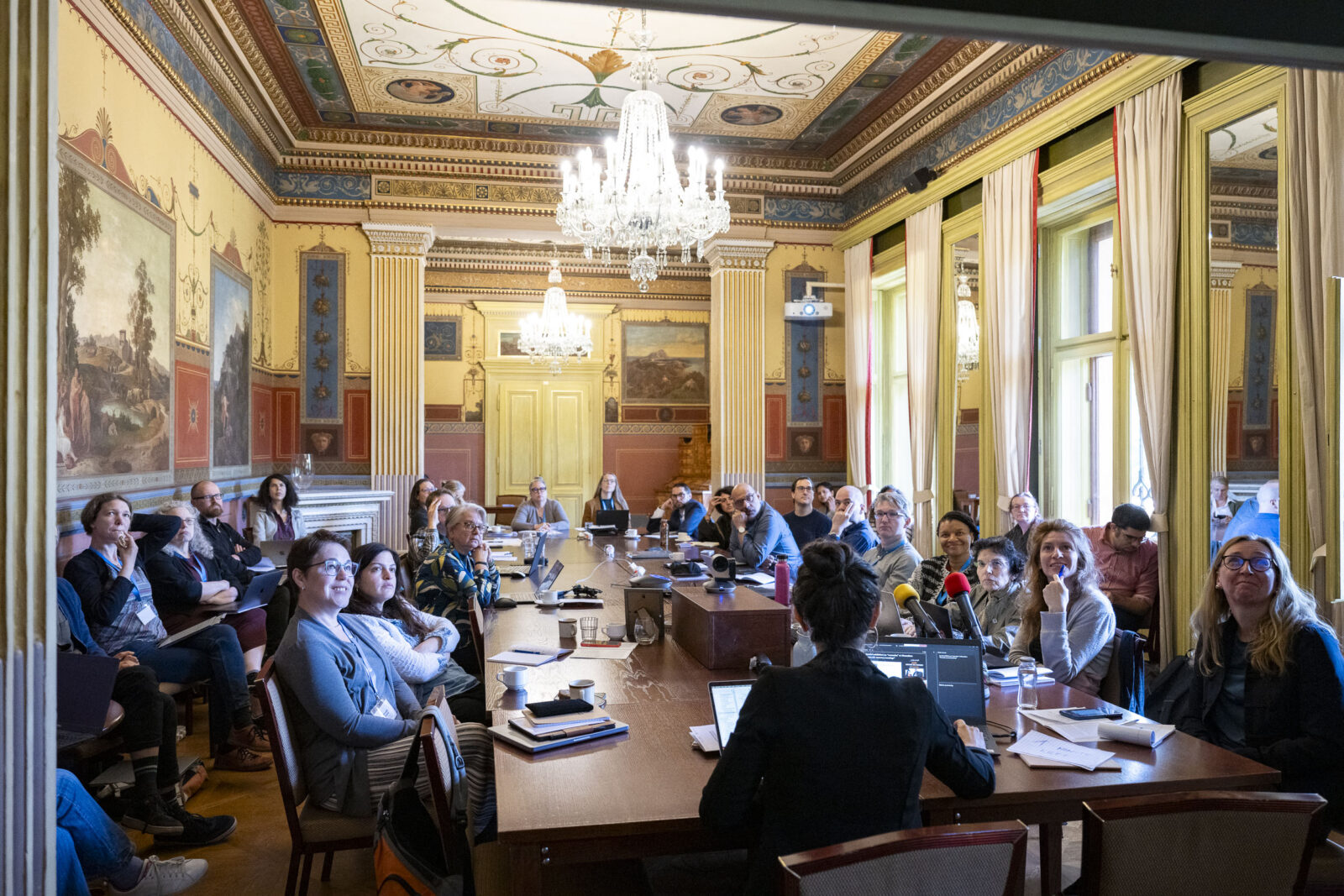
Participating in academic conferences in times of genocide, of wars and of democratic backsliding can feel like the very definition of living in an ivory tower. Yet, in-person forums remain increasingly rare, but important occasions to meet, debate, build solidarity and exchange ideas with colleagues and practitioners who are not based at the same institution or even in the same country. The goal of the conference “Romani Racialization Beyond Majority-Minority Narratives: Transnationalism, Activism and Solidarity”, that took place on May 21–23, 2025, in Prague at Vila Lanna, at the Institute of Czech Literature, and at CEFRES was precisely that: to serve as a space to foster connections among scholars from a broad disciplinary range and at different stages of their careers, while also including activists and human rights practitioners.
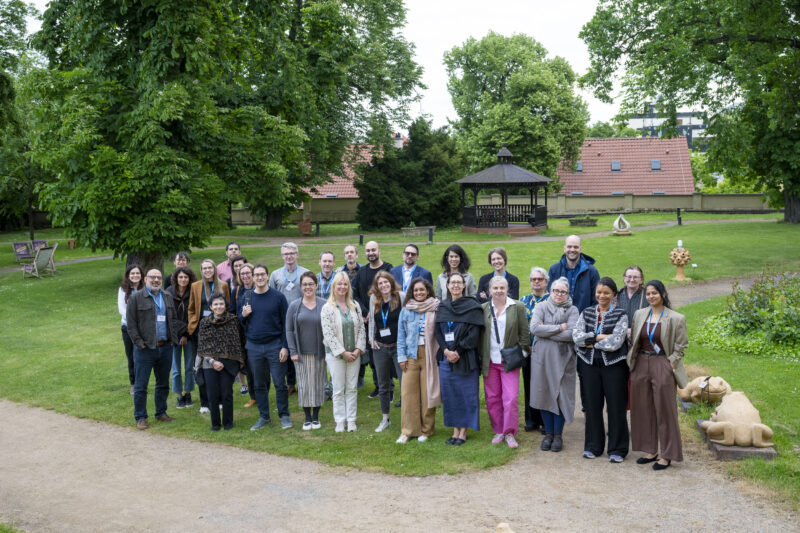
Participants of the Romani Racialization Beyond Majority-Minority Narratives conference (Photo: D. Kumermann)
The conference, organised also as the annual conference of the Prague Center for Romani Histories, spanned over three days and opened with a roundtable titled “Beyond “Europe’s Largest Ethnic Minority”. Comparing and Contrasting Social Justice Projects’ in which we explored what kind of questions are worth asking, and what comparisons we should explore, to advance Romani rights in dialogue and in solidarity with the experiences of other minorities.
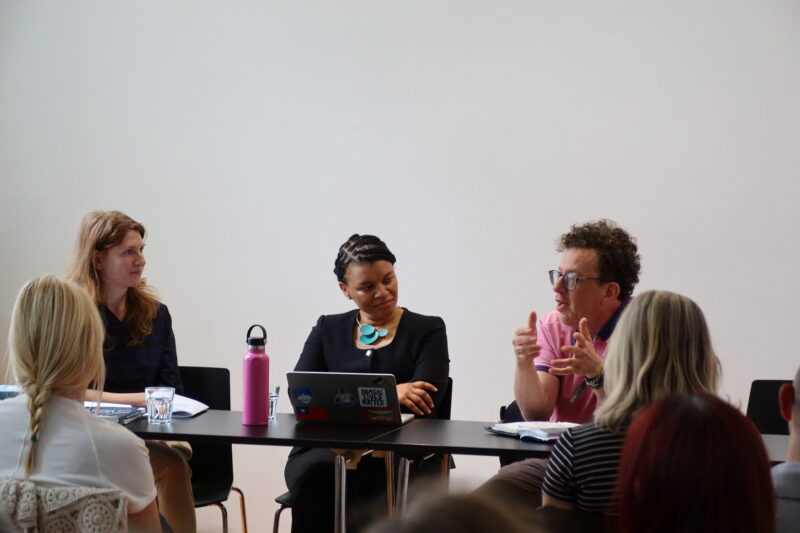
Opening roundtable to the Beyond Majority-Minority Narratives conference. From right to left: Tina Magazzini, Sunnie Rucker-Chang and Claude Cahn (Photo: L. Holzbachová)
The opening discussion offered insights from a human rights practice and policymaking perspective, as well as from academia, to set the stage and reflect on the big questions that drove this conference: what can civil rights scholarship contribute to the research on Roma rights; what trade-offs exist in the relationship between anti-Roma racism and other struggles; how can minority’s memories and experiences be culturally represented and displayed while protecting vulnerable groups?
Over the next two days, different scholars presented their ongoing work over five conference panels, covering various themes, such as the production of categories of Roma race-making; thick solidarities across the race-mobility-migration nexus; and the role of territory and class for solidarity in racialized contexts.
Each day was opened by a keynote lecture: the first was delivered by Jelena Savić, from Uppsala University, who delivered a powerful presentation on the “darker side” of East European (post)coloniality through the case of the Balkan Roma minority. On the second day, Manuela Boatcă, from the University of Freiburg, offered an inspiring keynote on the challenge of “unthinkable histories” for Romani Europeans.
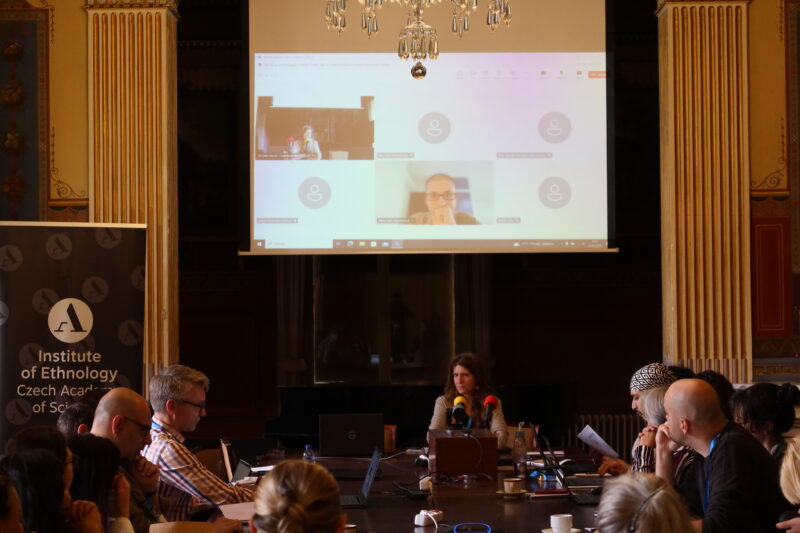
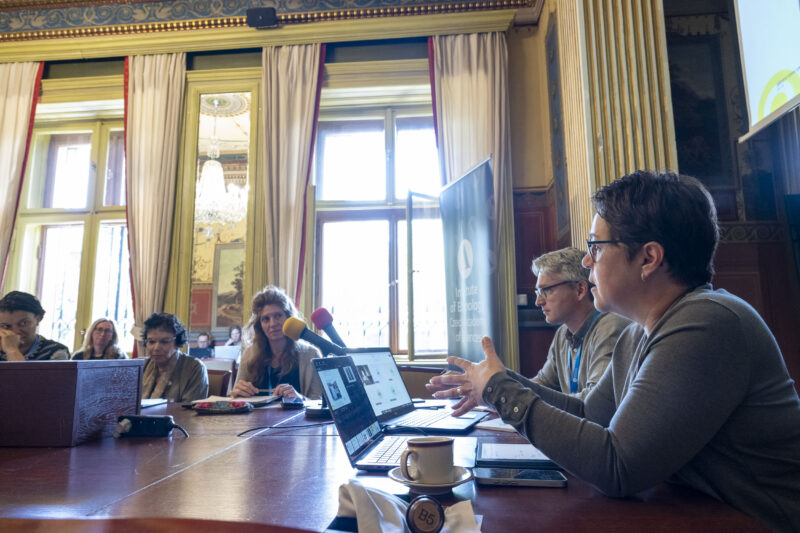
Keynotes by Jelena Savić (above, on screen) and Manuela Boatcă (Photos: L. Holzbachová and D. Kumermann)
Throughout the conference, historians, ethnographers and political sociologists pushed their own disciplinary and geographical boundaries to provide thoughtful, innovative thinking on how we can better theorize and research issues of relational racialization within Romani studies – and how and if it can relate to area studies, migration studies and Black studies.
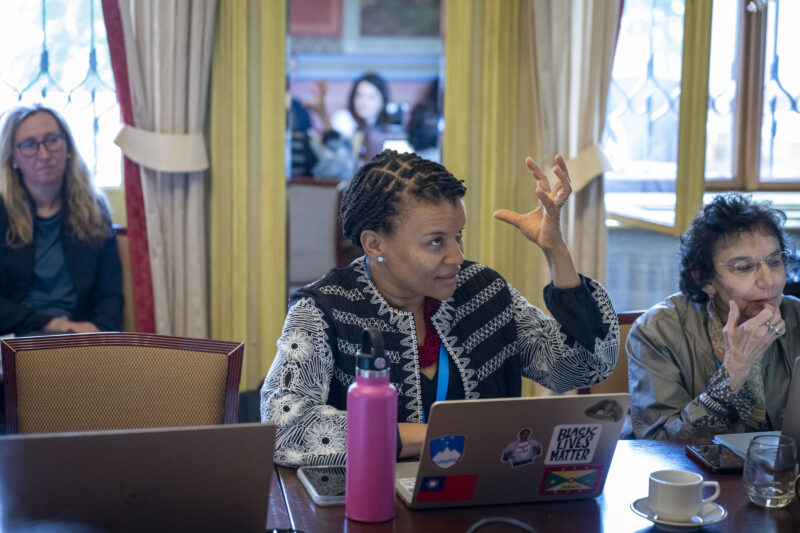
From right to left: Helena Sadílková, Sunnie Rucker-Chang and Carol Silverman (Photo: D. Kumermann)
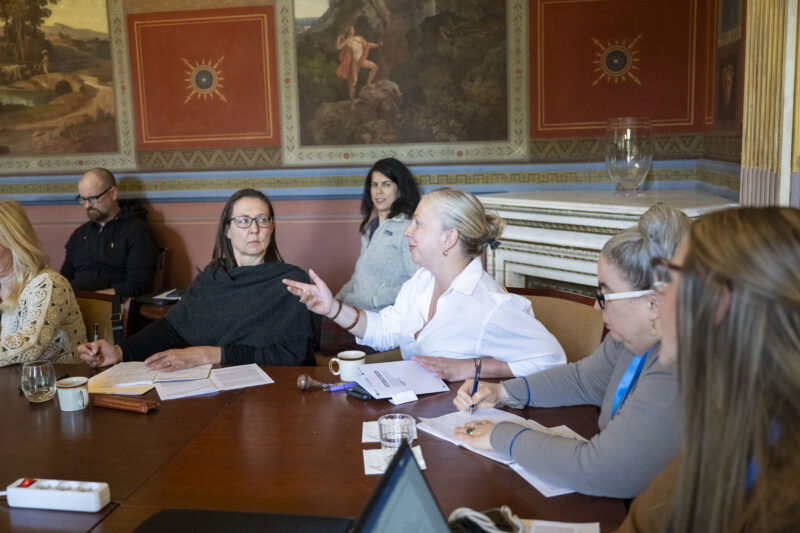
From left to right: Paul Kiel, Ann Ostendorf, Joanna Kostka, Mariana Sabino Salazar, Gwendolyn Albert and Daniela Gress (Photo: D. Kumermann)
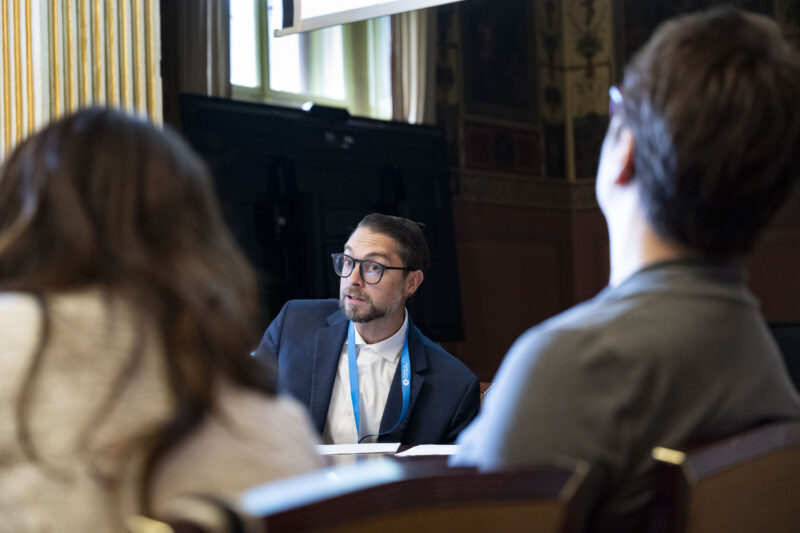
Dalen Wakeley-Smith (Photo: D. Kumermann)
During the conference, the presenters were also joined by researchers coming from the Central European University’s Romani Program, Charles University, NYU in Prague and civil society participants. Serving primarily as discussants and chairs they enriched the debates. Rufat Demirov (CEU), in particular, encouraged everybody to reflect on their positionality, and ways this affects the kind of knowledge production we engage in.
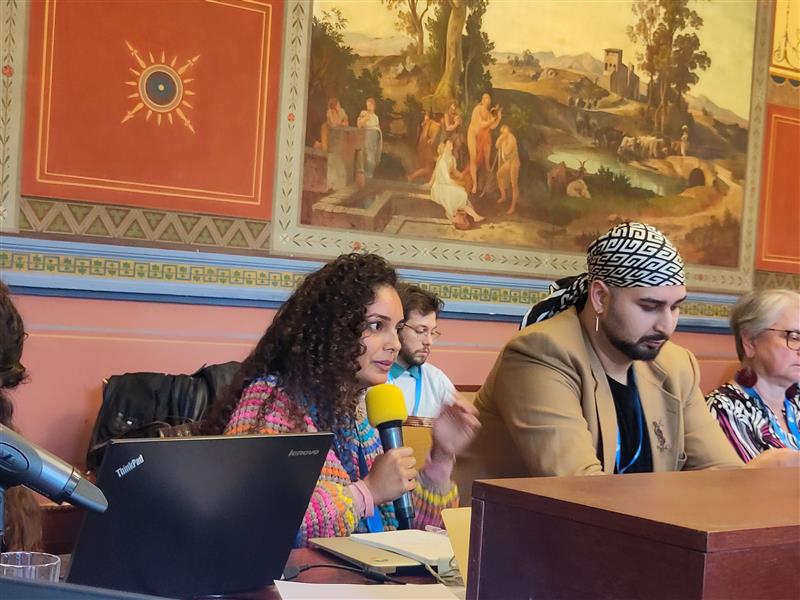
From right to left Gabriela Marques Gonçalves, Rafael Buhigas Jiménez (back row), Rufat Demirov and Nadya Jaworsky (Photo: Tina Magazzini)
Finally, on the last day, in line with the tradition of holding the closing session at Prague’s French Research Center in Humanities and Social Sciences (CEFRES), Elana Resnik (University of California) presented her newly published book Refusing Sustainability: Race and Environmentalism in a Changing Europe (Stanford University Press, 2025).
The presentation attracted an engaged audience eager to discuss the junctures of capitalism’s excess, environmental and racial inequities, to (re)imagine through Romani life-worlds how to challenge the narratives that produce certain minorities and realities as discardable.
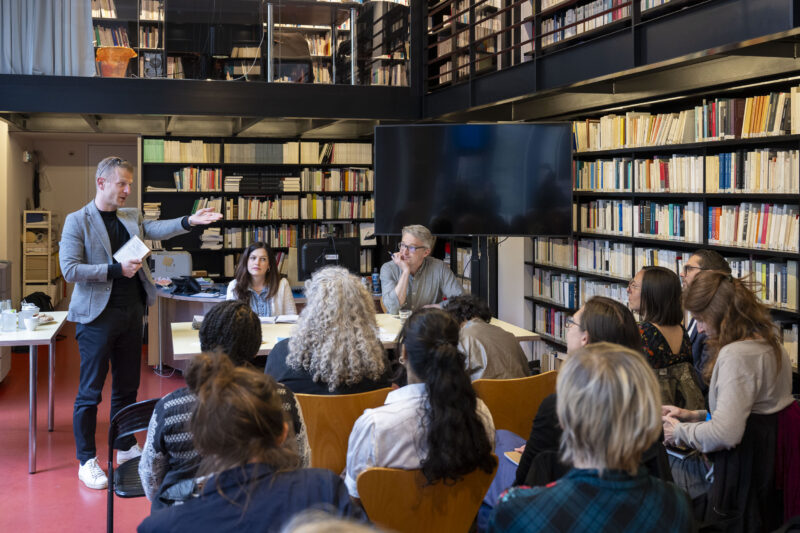
Mateusz Chmurski (the director of CEFRES in Prague) welcoming everybody at the book discussion (Photo: D. Kumermann)
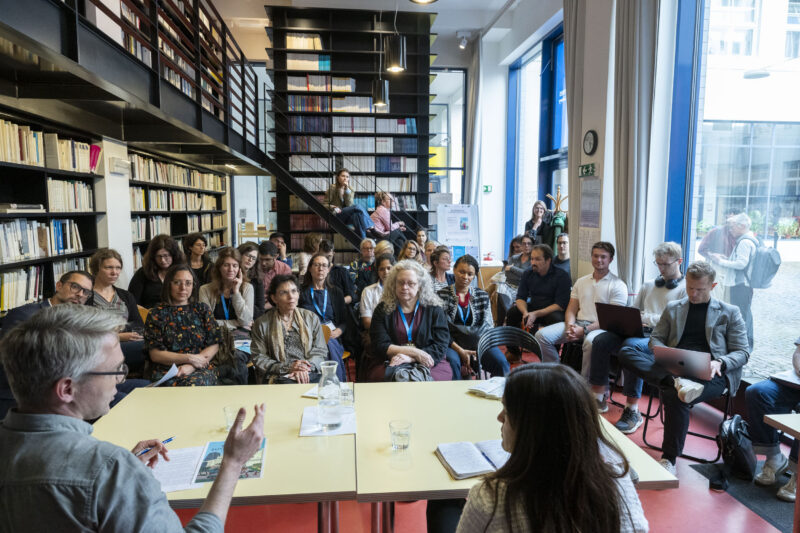
Book discussion at CEFRES (Photo: D. Kumermann)
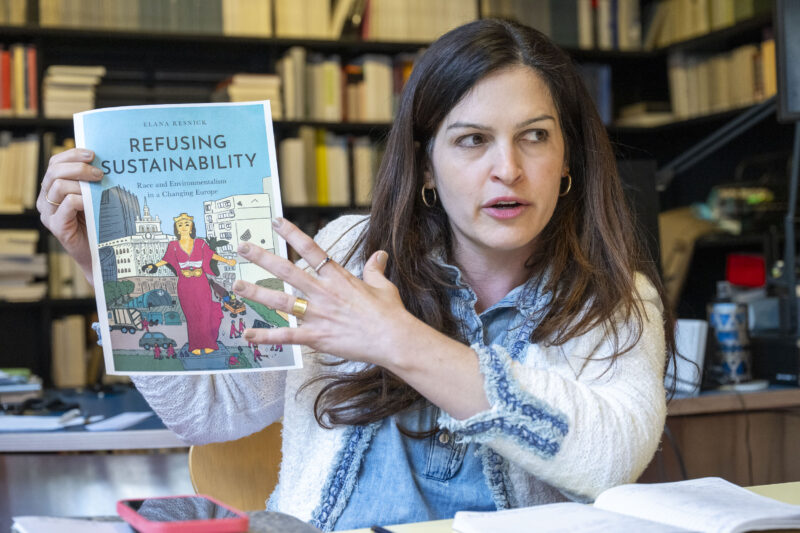
Elana Resnick talking about her new book (Photo: D. Kumermann)
On the whole, the conference proved to be a stimulating experience and, judging from the feedback we received, it provided a much-needed space to at least start pulling together various threads of Romani-related scholarship that would connect it to that related to other racialized minorities. We can learn much from exploring such solidarities, complicities and conflicts between various groups, yet work is often developed in isolation. We were also left with a sense of urgency and the energy needed to link grassroots social justice struggles with demands for political and epistemic recognition and representation. How can we as scholars foster, facilitate and participate in solidarity actions and movements while also studying these realities?
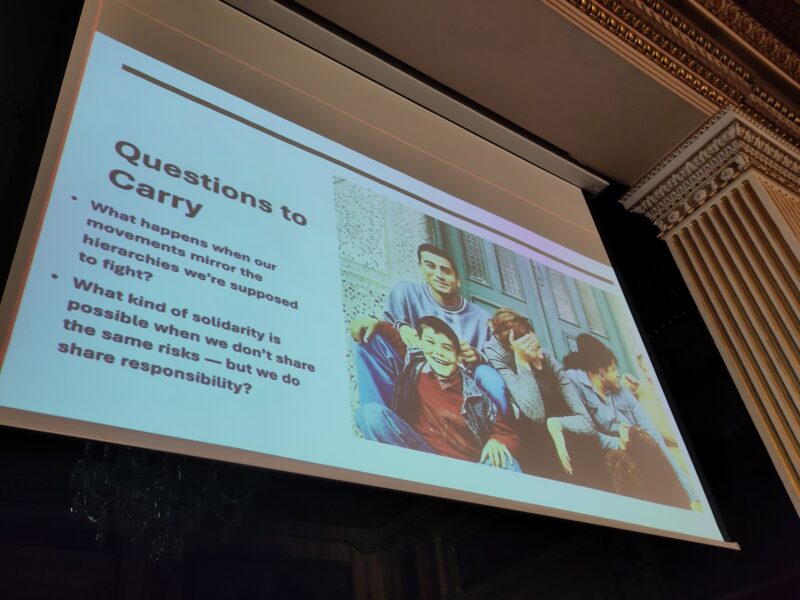
Slide for Joanna Kostka’s presentation (Photo: Tina Magazzini)
We will continue to carry these questions – and hopefully these collaborations and constructive debates – throughout the rest of the Romani Atlantic project, as we continue researching transatlantic relational formations of race while centring Romani communities, and making sense of the data collected so far.
We are thankful for the stimulating event that was made possible by by the Czech Academy of Sciences” Lumina Quaeruntur Fellowship (project Romani Atlantic: Transcontinental Logic of Ethno-Racial Identities, LQ300582201) and Strategy AV21 – Identities in the World of Wars and Crises, and of course by all participants!
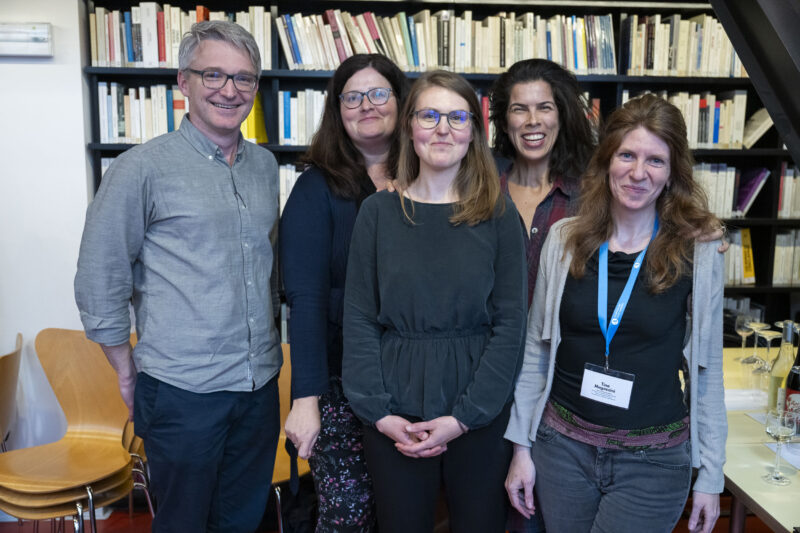 Romani Atlantic project team (from left to right: Martin Fotta, Karolina Válová, Kateřina Joštová, Mariana Sabino Salazar and Tina Magazzini; photo: D. Kumermann)