Race, Nation and Lusophone Gypsylorism
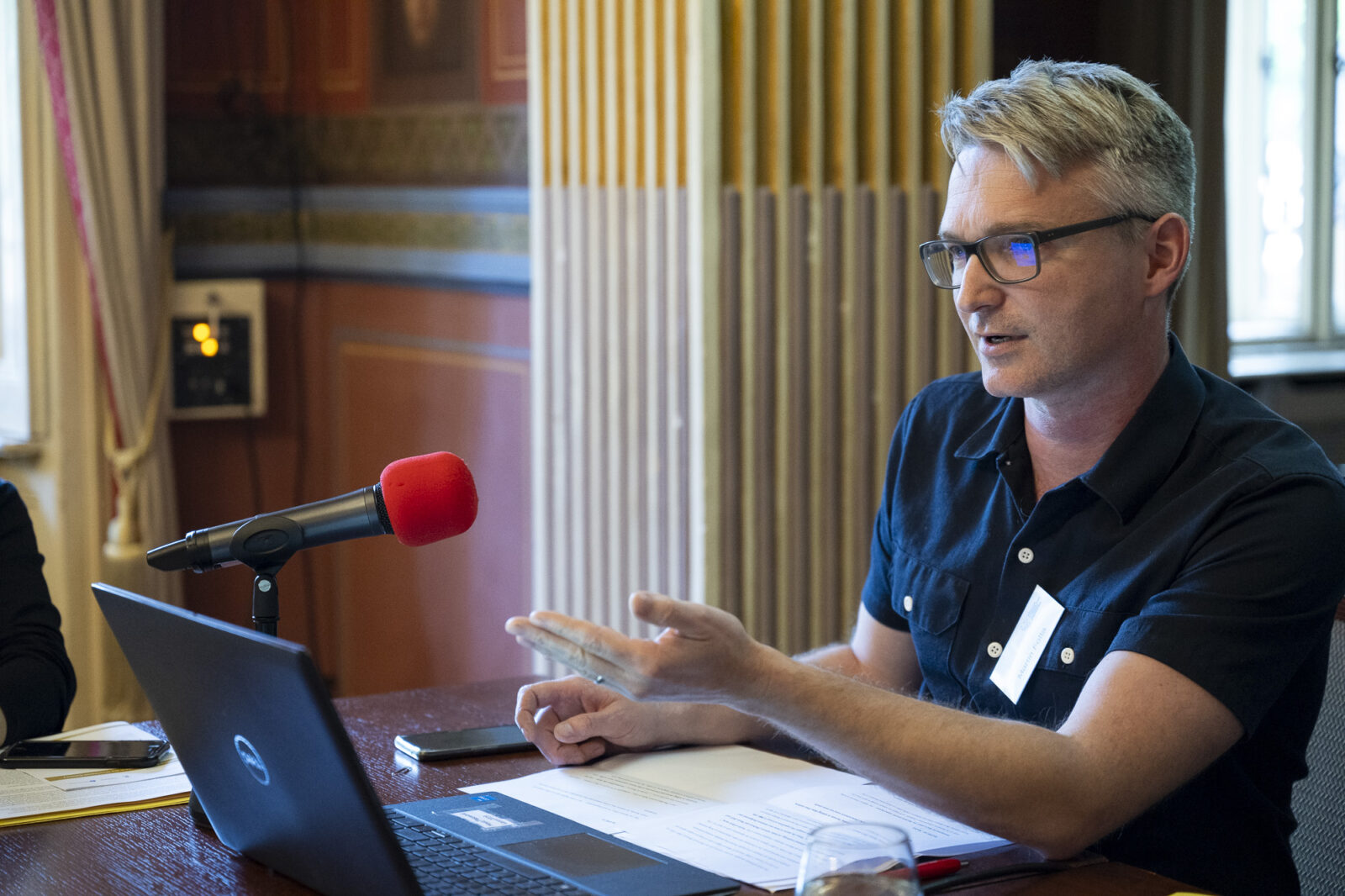
Martin Fotta presented a paper titled ‘Race, Nation and Lusophone Gypsylorism’ at the 2024 conference of the Prague Forum for Romani Histories ‘Racializing Romani People in the Nineteenth Century’. The conference took place in Villa Lana in Prague on May 20-21, 2024. The event was organized in collaboration with and received financial support from the Romani Atlantic project at the Institute of Ethnology, Czech Academy of Sciences. Keynote lectures were delivered by Margareta (Magda) Matache from Harvard University and Sunnie Rucker-Chang from Ohio State University.
Martin’s presentation summary: When comparing the first two books about Romanies published in Portuguese, the central axis that emerges as significant is the ways colonial and race dynamics shaped the views of Romani people in 19th-century scholarship. The authors of the two books were contemporaries living in Brazil and Portugal and were interested in folklore, race, and nation-related issues. Melo Morais Filho (1843-1919), a Brazilian doctor and pro-abolitionist folklorist, wrote Ciganos no Brasil in 1886, depicting Romanies (Ciganos) as a crucial part of the Brazilian nation’s racial diversity (mestiçagem). According to him, Romanies were the ‘weld that united the three pieces [Indian, Portuguese, African]’ that made up Brazilian civilization. The second author, Adolfo Coelho (1847-1919), one of the founders of modern ethnology and linguistics in Portugal, wrote Os ciganos de Portugal in 1892. In his book, Coelho disputes Morais Filho’s claims about Romani contribution to the Lusophone popular culture, arguing that Romani culture was at a ‘primitive stage’. The book reflects contemporary positivism and evolutionary interpretations of what was then considered Portugal’s national decline. These concerns were influenced by the Berlin conference (1884) where other European colonial powers demanded that the Portuguese authorities adopt modern colonial management practices, including racial science, settlement, and effective occupation of territories.
More information about the conference: http://www.romanihistories.usd.cas.cz/roundtable-conferences/international-conference-racializing-romani-people-in-the-nineteenth-century/